

What Is a Bull Run in Crypto and How to Prepare for It?

The cryptocurrency market develops cyclically: periods of calm are followed by phases of active growth, when the prices of tokens and coins rise rapidly, and interest in them increases sharply. Traders and investors call this phase a bull run. However, growth is not endless — corrections always follow an upturn. Therefore, it is important to understand in advance what is happening in the market and how to prepare for it so as not to make decisions based on emotions.
In this article, we will find out what a bull run is, how to recognize a growth phase, analyze the most striking growth spurts in history, and what to consider before entering the market.
- Bull Run: What Is It in Simple Terms?
- Signs of the Beginning of a Bull Run
- History of Bull Runs in Cryptocurrency
- What Usually Causes a Bull Run?
- How Should Investors Prepare for a Bull Run?
- Strategies for Making Money During a Bull Run
- How Not to Lose Money in a Bull Run?
- When Does a Bull Run End?
- Expert Forecasts for the Next Bull Run
Bull Run: What Is It in Simple Terms?
A bull run is a period when cryptocurrency prices rise rapidly and significantly in a short time. Assets become more expensive almost nonstop, demand increases sharply, and a lot of new money enters the market. Investors expect growth to continue and start buying more actively than usual.
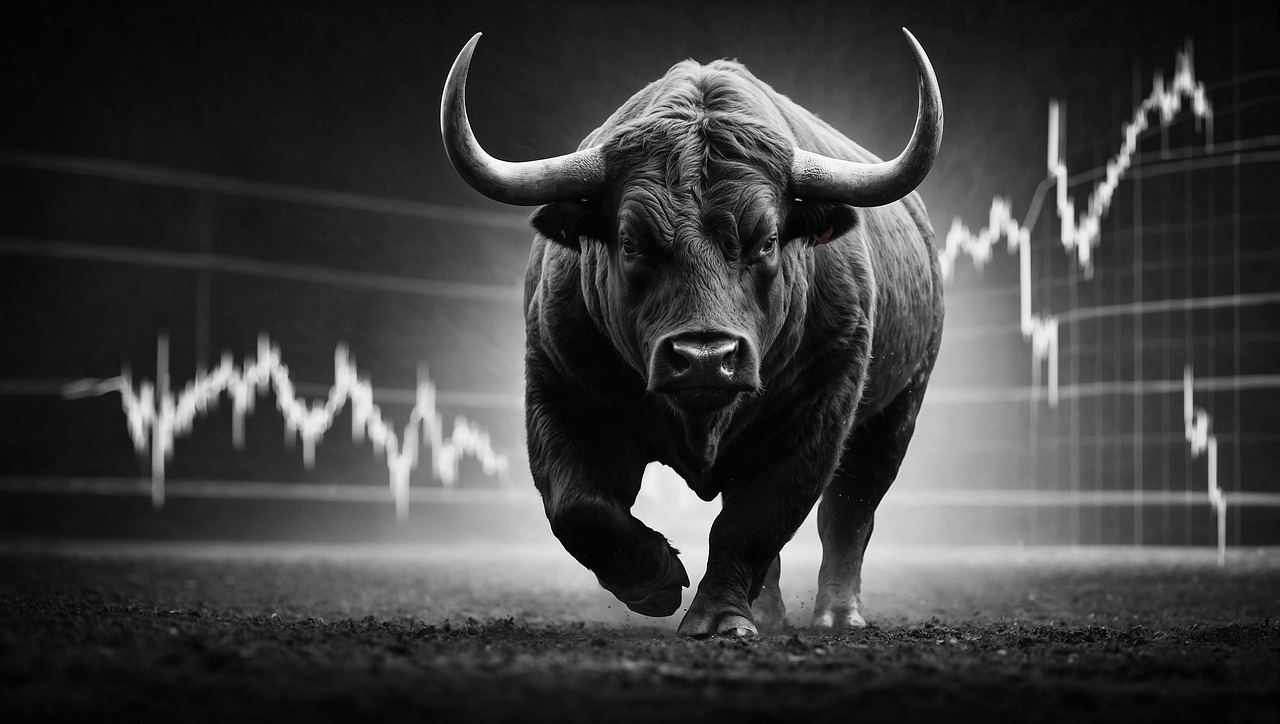
The term comes from traditional financial markets. The bull is considered a symbol of growth because when it attacks, it lifts its opponent with its horns from the bottom up, just as the price on the chart moves upward. The word "run" means 'sprint' or "race," emphasizing the speed of what is happening. As a result, a bull run is a rapid rise in the market.
In cryptocurrency, phases of rapid growth are particularly evident due to high volatility. A bull run can be triggered by important news, an influx of large capital, technological updates, or general market optimism. A temporary price spike should not be confused with a bullish market, which is accompanied by long-term stable growth. A bull run is an accelerated phase, often followed by a correction.
Signs of the Beginning of a Bull Run
A period of active growth rarely begins suddenly. Before it starts, the market sends several distinctive signals that may indicate a change in trend:
- Rapid growth in prices and trading volumes — assets are becoming more expensive, transactions are becoming more frequent, and demand significantly exceeds supply.
- Positive market sentiment — cryptocurrency is increasingly being discussed on social media and in the media, and forecasts are becoming optimistic.
- Inflow of large capital — news appears about cryptocurrency purchases by funds, companies, and other major players.
- Growing interest in altcoins — after the rise of Bitcoin, investors' attention is gradually shifting to other coins.
History of Bull Runs in Cryptocurrency
To better understand how phases of active growth are formed, it is useful to examine past cycles. The history of bull runs shows what factors triggered growth and how it usually ended.
Bull Run 2013
The first truly noticeable bull run occurred in 2013. The price of Bitcoin rose from around $13 to $1,100. The market began to attract users in large numbers, the first large exchanges appeared, and cryptocurrency began to be mentioned more often in the media. After reaching its peak, a sharp correction followed, during which the rate fell significantly, underscoring the market's cyclical nature and high risks.
Bull Run 2017
In 2017, growth became global. Bitcoin rose in price from $1,000 to almost $20,000. The market saw an influx of private investment, cryptocurrency became a constant topic in the news, and major exchanges launched futures trading. The euphoria was accompanied by high volatility, and after peaking, the market entered a prolonged decline.
Bull Run 2021
The pandemic and large-scale infusion of money into the economy triggered a surge in digital asset prices. Interest in cryptocurrencies increased due to rising inflation and the search for alternative assets. Bitcoin updated its historical maximum twice — first to around $64,000, then to around $69,000. At the same time, DeFi projects and the NFT market were actively developing, which attracted new billions of dollars and even more participants to crypto.
What Usually Causes a Bull Run?
As history shows, a bull run in crypto is a phase that almost never starts by accident. As a rule, it is triggered by a combination of several factors:
- Bitcoin halving — reducing the reward for miners decreases the supply of coins and often becomes an impetus for price growth.
- The arrival of big capital — funds and companies view cryptocurrency as a defensive and long-term asset.
- The development of new areas — the growth of DeFi, NFT, and blockchain projects expands investment opportunities.
- Increased liquidity — the launch of ETFs, funds, and banking solutions facilitates entry into crypto for a broad audience.
- Low interest rates in traditional financial markets: investors are seeking more profitable assets to earn returns.
- Positive market expectations — growing confidence in cryptocurrencies is boosting demand and supporting the upward trend.
- Regulatory shifts — government recognition of crypto and changes in legislation are raising its status.
- Tokenization and restructuring of financial markets — the transfer of traditional assets to blockchain attracts new participants.
How Should Investors Prepare for a Bull Run?
During a period of active growth, profits can be substantial, and those who prepare in advance and act according to plan have the best chances. Key steps:
- Study the market — follow trends, cycles, and factors that affect cryptocurrencies and the global economy.
- Spread your risks — don't put all your eggs in one basket; distribute your funds among different coins.
- Follow the trend — use basic technical analysis to understand the general direction of the market and choose the right moments to enter and exit.
- Control the situation — determine acceptable losses in advance and use stop-losses.
- Don't make emotional decisions — don't panic over short-term dips and don't take risks under the pressure of hype.
Strategies for Making Money During a Bull Run
Let's look at some popular approaches:
- Buy and hold — purchasing cryptocurrency with the intention of selling it at a higher price closer to the end of the phase.
- Accumulation during growth — gradually acquiring assets while the market is moving upward and maintaining an upward trend.
- Working with pullbacks — buying crypto during periods of temporary price declines with the aim of profiting from subsequent growth.
These strategies do not require complex tools, but even in a bull run, the market can fluctuate sharply, so risk control remains essential.
How Not to Lose Money in a Bull Run?
Periods of sharp growth in the crypto market present opportunities, but discipline allows you to exit them with a profit. Let's look at the basic rules of risk management that will help prevent losses:
- Only invest what you are ready to lose — a bull run does not guarantee profits.
- Protect your positions — if necessary, use hedging and reduce the volume of transactions.
- Do not increase losing positions — averaging down often increases losses.
- Lock in your results — determine your profit and loss levels in advance.
Experts advise developing a strategy and sticking to it. Most often, a bull run ends not with a sharp reversal, but with a series of false rises and prolonged pullbacks. At this stage, the risk grows faster than the potential profit. Therefore, locking in results and sticking to your trading plan becomes more important than trying to catch the best rate.
When Does a Bull Run End?
When a bull run is coming to an end, the market sends signals:
- Declining trading volumes — prices may still rise, but there are fewer participants, and momentum is weakening.
- Mass profit-taking — large and experienced investors begin to exit their positions.
- Sharp corrections — deep pullbacks are more common, with no quick recovery.
- Overheated expectations — the market is overflowing with euphoria, promises of "endless growth," and unrealistic forecasts.
- Negative macro factors — tightening monetary policy, rising interest rates, or pressure from regulators.
It is impossible to predict the exact date of the end of the active growth phase.
Expert Forecasts for the Next Bull Run
Most analysts agree that the main momentum of the 2024–2025 bull run has already been realized, with the peak occurring in the fall of 2025. In the near term, the market is likely to enter a phase of consolidation or correction.
According to cautious forecasts, the next powerful growth cycle may not begin before the end of 2026 or 2027, with potential targets in the range of $150,000–250,000. At the same time, the bullish scenario has not been completely ruled out: a return of active inflows into ETFs and easing of regulations in the US could support the market and keep the chances of growth to $150,000–$200,000 alive as early as 2026. Macroeconomics and political decisions will continue to play a key role.
It is impossible to predict the exact date of the start of a bull run. Growth usually forms gradually and depends on a combination of market cycles, macroeconomics, capital inflows, and investor sentiment. Analysts can only assess likely scenarios but cannot guarantee them.
Growth usually starts with Bitcoin. It attracts the bulk of capital and sets the market's overall direction. After its rise, investors' attention gradually shifts to altcoins, which begin to grow later.
The active phase of a bull run most often lasts several months. At the same time, sharp pullbacks and periods of sideways movement can occur within a single cycle, making growth uneven.
Need to exchange Bitcoin to dollars?
ObmenAT24 guarantees a profitable and secure transaction. Our advantages are a loyalty program, low commissions, anonymity, and high reserves.


